Going to War with the Cartels: The Military Implications
U.S. military strikes an alleged Venezuelan cartel drug vessel in the southern Caribbean, killing 11, President Trump says. Photo: The White House
On September 2, President Trump announced that the United States had killed 11 “Tren de Aragua Narcoterrorists” in a strike on a suspected drug-carrying boat. He had vowed to “demolish the foreign drug cartels” during the campaign and continued his threats after the inauguration, pointing to the devastating effects of drug trafficking, particularly fentanyl.
In recent weeks, the Trump administration has deployed naval assets to the Caribbean, with nine warships now in the region. Two Venezuelan F-16 jets flew over one of these ships last Thursday; on Friday, the administration deployed 10 F-35 jets to Puerto Rico in response. With Secretary of Defense Pete Hegseth warning that military action “won’t stop with just this strike,” what does a war on cartels mean in military terms?
The military’s primary mission will likely be conducting surveillance across the Caribbean and along the U.S. West Coast. Some maritime targets, once located and identified, might be struck with missiles, as happened on September 2. Missile strikes ashore are also possible, but Marine and special operations raids are unlikely because of the high risk. Although military forces have been deployed to counter drug smuggling, the Coast Guard—with both military and law enforcement authorities—has historically been at the forefront.
The strike on the suspected drug boat was a dramatic and symbolic way for the president to make a point to the American public and the cartels. After this initial show of force, however, the administration should turn this war over to the Coast Guard and law enforcement agencies, which are much better prepared to handle these kinds of operations.
Q1: Is it unprecedented to use military force to counter drug smuggling?
A1: No . . . and yes. Naval forces have deployed for counter-narcotics missions for a long time. These ships embark a Coast Guard Law Enforcement Detachment (LEDET) that specializes in interdicting and boarding vessels. The Oliver Hazard Perry–class frigates frequently patrolled the Caribbean with the Coast Guard before decommissioning in 2016. In 2020, the first Trump administration maintained, on average, six warships in the Caribbean for “enhanced counter narcotics operations.”
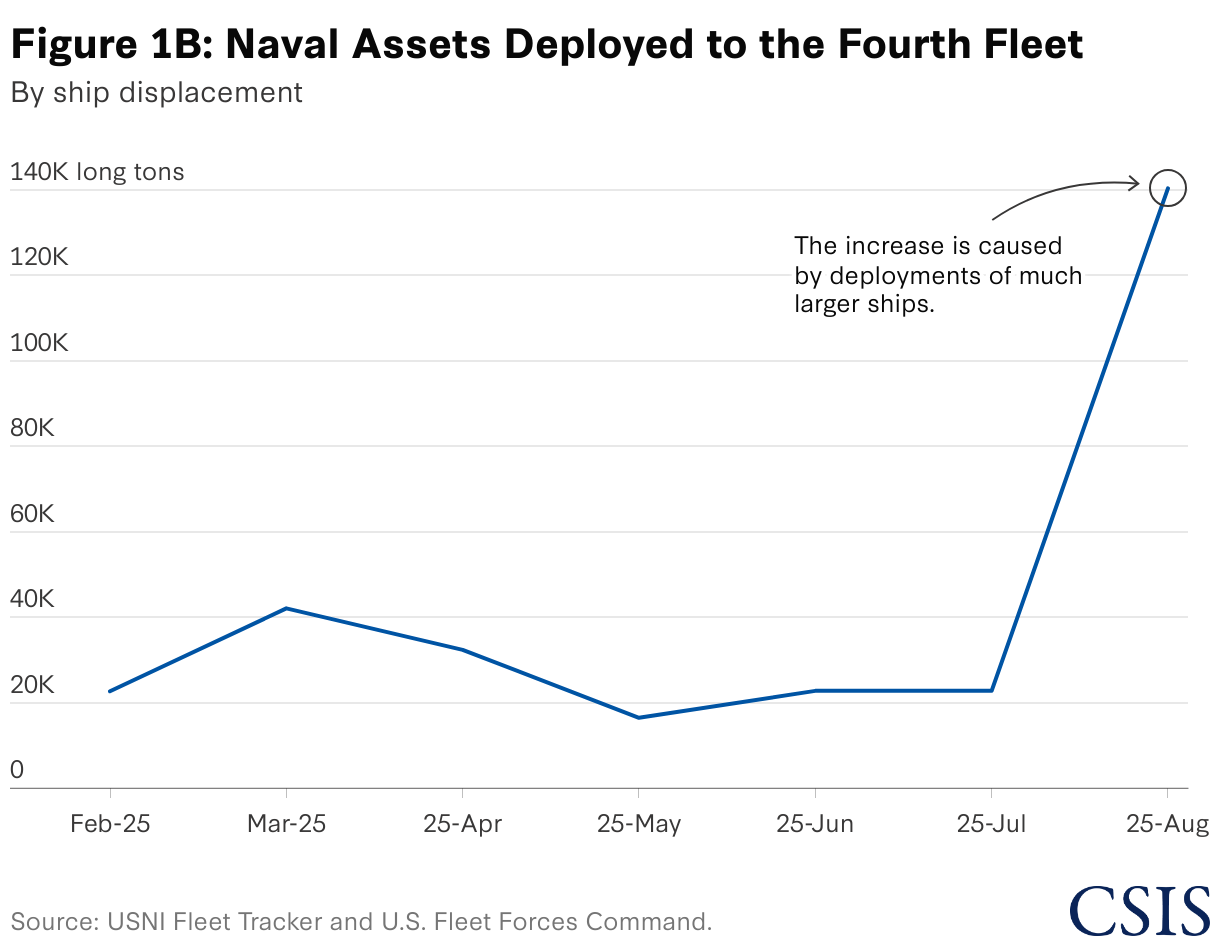
Figure 1A shows that the number was about half that during the spring of 2025 but doubled in recent weeks. Figure 1B also shows that ship displacement increased sixfold because the deployments included much larger ships. While some ships supported maritime exercises or deportation operations at Guantanamo Bay, most have been deployed with a LEDET in response to the president’s declaration of national emergency at the southern border.
What was unprecedented in the September 2 strike was the method of interdiction—a missile strike sank the boat without warning and with the crew onboard. While the Coast Guard does use force in such missions, it typically targets a vessel’s propulsion with machine guns or sniper rifles to disable it, not to destroy the ship while the crew is still on board.
Q2: Does the president have the authority to conduct this “war”?
A2: This is a question for the lawyers, who have already begun the debate. The administration argued that the president has the authority under Article II of the Constitution in his role as the commander in chief “to preserve, protect, and defend the Constitution of the United States.” President Trump reportedly signed a directive to use military force against cartels, following his designation of cartels as “foreign terrorist organizations” and singling out a Venezuelan criminal group, Cartel de los Soles, for sanctions.
Opponents argue that this designation is insufficient and that the War Powers Resolution of 1973 applies. This law requires the president to notify Congress within 48 hours and to terminate operations within 60 days without congressional authorization. However, presidents of both parties have argued that the law inappropriately limits presidential authority and have largely ignored it in the past. The Biden administration, for example, did not seek congressional authorization for its frequent strikes against the Houthis in Yemen.
Congress could pass an authorization for the use of military force (AUMF). Since the end of the Cold War, AUMF has substituted for a formal declaration of war. The AUMF signed into law on September 15, 2001, for example, authorized the president to wage war against the “nations, organizations, or persons he determines planned, authorized, committed, or aided” the September 11 attacks or “harbored such organizations or persons.” The 2001 AUMF has since been used as a controversiallegal basis for U.S. counterterrorism operations against the Taliban, al-Qaeda, and other organizations.
Q3: What can these military forces do?
A3: The Department of Defense (DOD)’s military forces are legally limited because they do not have law enforcement authority. They cannot arrest or detain anyone. The Coast Guard customarily takes these missions because it has law enforcement authorities and is specially trained for the mission. For this reason, the Coast Guard comes under the Department of Homeland Security, not the DOD (recently renamed the Department of War), even though it is one of the armed forces. With Coast Guard detachments aboard, the Navy can overcome this limitation.
The United States certainly has the necessary intelligence to conduct strikes against cartel bases and operations. Although the DOD has not put much emphasis on counter-drug intelligence in the past, other governmental organizations, like the Drug Enforcement Agency (DEA), have spent decades analyzing cartel operations. The DOD, with the entire Intelligence Community, is likely to now build on that work to identify cartel targets.
On land. With thousands of Marines involved, thoughts naturally turn to land operations. Marines, or special operations forces, might helicopter ashore and strike cartel bases. However, such operations face major diplomatic and political obstacles. The first is that Venezuela, and all countries with cartel problems, are sovereign nations. The United States cannot act within another country’s territory without the government’s permission, at least in theory. Doing so would constitute an act of war against a sovereign nation.
Real life gets complicated. The United States killed Osama bin Laden inside Pakistan without the government’s permission. It has repeatedly struck targets in Somalia and Yemen without the local government’s authorization.
The second problem is the risk of casualties. Any raid would encounter Venezuela’s weak but extant air defense and coastal artillery systems. As seen in the first Gulf War, Kosovo, and the invasion of Iraq, completely suppressing enemy air defenses is difficult, even with dominant air power. Casualties would be difficult politically; a captured American, as might happen in a plane crash, would be catastrophic. The political need to get the captive home gives the adversary immense leverage. This happened in Lebanon in 1983 (Lt. Robert Goodman captured after his A-6 was shot down) and in Somalia in 1993 (CWO-3 Michael Durant captured when his Blackhawk was shot down).
From the air. The United States has used air strikes extensively in similar situations because of their precision and much lower risk of U.S. casualties. The United States might use long-range missiles to strike cartel facilities in rural areas, where the risk of collateral damage is low. Shipborne Tomahawk missiles, for example, can reach 1,000 miles, enough to strike targets anywhere in Venezuela while still giving the ship some standoff distance.
Using aircraft to overfly Venezuela and drop ordinance adds risk. Against Iran, the United States had to use B-2s because only they could deliver the special bunker buster munition (GBU-57). For other targets, the United States used Tomahawks fired from sea. Thus, there is no need to use B-2s here, except to make a political statement: We can go anywhere, and you can’t stop us.
At sea. Attacking cartel assets at sea avoids the sovereignty issues that arise with attacks on land. That does not mean that international waters are a free-fire zone. Ships and individuals still have rights, though the administration may choose to ignore those, as it did in this most recent strike.
Secretary of State Marco Rubio argued that intercepting drug ships has not worked but that “what will stop them is when you blow them up.” The implication is that interception is not enough, and fear will deter voyages.
The problem is identification and tracking. There is an immense amount of traffic in the Caribbean, and nearly all of it is legitimate. Identifying the few bad actors takes a lot of effort. The Coast Guard does not shoot first but stops and inspects suspicious vessels. Those carrying illegal substances can be detained while legitimate vessels go on their way.
The risk with shooting first and asking questions later is that, sooner or later, forces will make a mistake. Intelligence and strike systems consist of human beings who are inherently fallible. For example, after Palestinian terrorists murdered Israeli athletes at the 1972 Olympic Games, Israel went on a campaign to kill all those involved. The campaign was highly successful, but eventually, it made a mistake. Mossad agents assassinated a Moroccan waiter in Norway who, it turned out, had no connection with terrorist organizations.
Q4: Would the Coast Guard be better at this mission?
A4: Yes. From seizing smuggled opium in San Francisco Bay in the 1880s to capturing over 106 metric tons of cocaine last year, the Coast Guard has been conducting counterdrug operations for over a century. The Coast Guard has law enforcement authority, specialized counterdrug experience, and mission-specific equipment that make it well-suited to this mission. The Coast Guard also has extensive training in building a legal case for prosecuting captured cartel members. Without careful consideration of the rules of evidence, these cartel members might have to be released when they reach shore.
The Coast Guard could also use lethal force if so ordered, as its cutters are armed with enough firepower to take down any cartel vessel. The cartels know this and seldom resist. When they do, their ships get boarded and, indeed, burned and sunk. The Coast Guard’s approach allows them to capture and interrogate cartel members, collect evidence, and prepare case packages for criminal prosecution by the Department of Justice.
Not only are Coast Guard cutters better suited for this mission, but they are also much cheaper. Navy destroyers have systems and capabilities for a great power conflict, critical in a fight against China in the Western Pacific, but useless for counter-drug operations. Table 1, below, compares the current Navy destroyer (DDG-51 Flight III) with the Coast Guard’s National Security Cutter and proposed Offshore Patrol Cutter (successor to the current Medium Endurance Cutters).
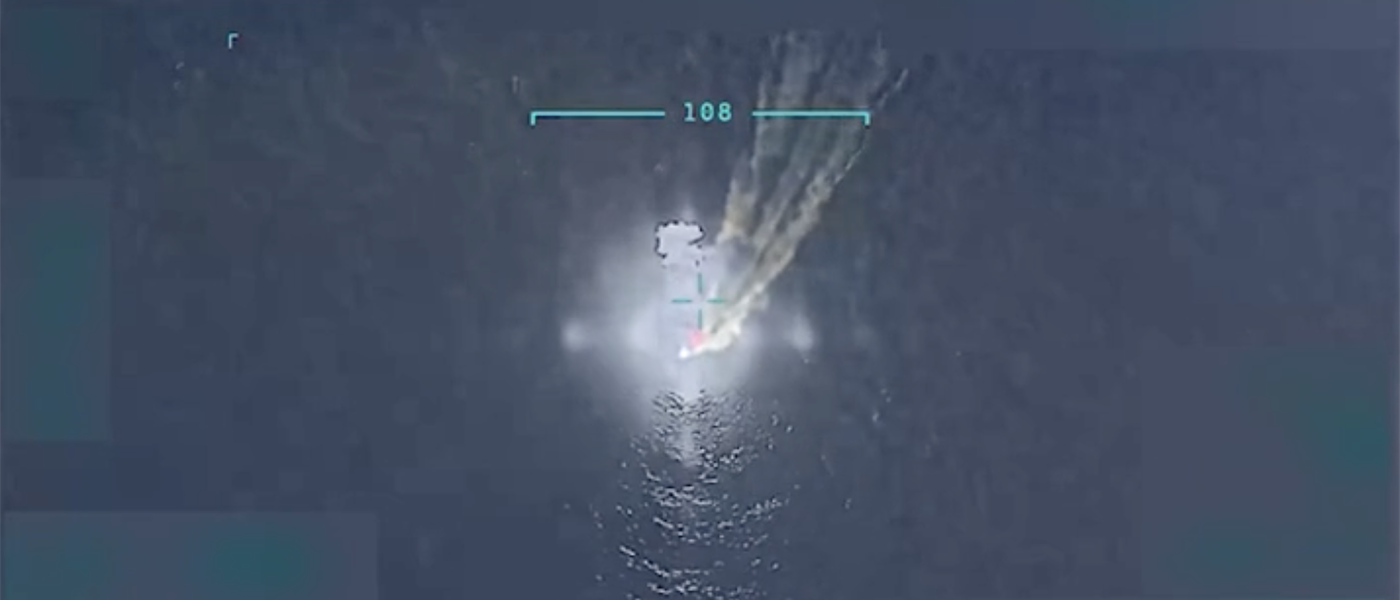
The DOD has yet to confirm which munition was used in the “precision strike” on Wednesday, but they are expensive. Hellfire air-to-ground missiles, which some public reports suggest may have been used, cost around $100,000.
Q5: Is this counter-narcotics operation a cover for an attack on Venezuela?
A5: The Maduro regime thinks so. On August 25, Maduro reported that 15,000 “well-armed and trained” men were deployed along the border. He also announced the mobilization of 4.5 million militia members, an improbable number that represents more than 10 percent of its population.
The Trump administration has not yet indicated any intention of a ground invasion of Venezuela. The U.S. force at its current level of deployment, although powerful, is far too small to undertake such a mission. The United States deployed over 20,000 troops when it invaded Panama in 1989, even though it faced only a few thousand Panamanian troops and paramilitary forces. Table 2 estimates the U.S. forces needed to carry out an invasion, using doctrinal guidelines and past military campaigns. An invasion of Venezuela would demand significantly more resources than are currently on hand if the Trump administration were to be serious about pursuing it.
The administration often seeks to intimidate its opponents. Positioning warships and aircraft near Venezuela, even if insufficient for ground operations, puts the Maduro regime on notice about potential U.S. military capacity. With the assets in place today, U.S. forces could conduct air or missile strikes against the Maduro regime from a sanctuary offshore.
Q6: What would it take for the Coast Guard to replace the Navy in this expanded role?
A6: Money and time. The Coast Guard would require a long-term increase in personnel and budget to handle this additional commitment without cutting back on its many statutory requirements. This enhancement might consist of three elements.
First, increase Coast Guard personnel by 3,000 in the next fiscal year, as the service seeks to add 15,000 members by 2028. The Coast Guard is the smallest of the armed forces with only 43,000 service members—one-quarter the size of the Marine Corps and one-eighth the size of the Navy. Yet, this small service has 11 statutorily defined missions, including search and rescue, security of 360 ports and 95,000 miles of shoreline, and polar exploration. More activity requires more forces. Additional personnel would allow the Coast Guard to maintain a higher level of operations and to crew new ships.
Second, consider ways to further stretch the service life of the current Medium Endurance Cutters (MEC) and accelerate procurement of the Offshore Patrol Cutter (OPC). MECs, the main ships for interdiction missions, have long surpassed the original 30-year design service life and face frequent failures and expensive maintenance due to parts obsolescence. Despite life extension programs, most MECs face block obsolescence while the first of the planned replacements, the OPC, is not expected to enter service until the end of 2026. There is a capability gap problem until the OPCs come into service in large numbers. Life extensions for additional MECs, while costly, could help bridge this gap. Funding could come from the nearly $25 billion investment the Coast Guard received in the One Big Beautiful Bill Act. Making investments to accelerate OPC production—for example, a third block buy—would be the best long-term approach for addressing the aging MEC fleet.
Third, build two additional National Security Cutters (NSC). These highly capable ships are more than what is customarily used for counter-drug operations but would emphasize the mission’s importance. The Trump administration canceled the eleventh NSC and has not signed a contract for the partially funded twelfth. Pushing these ships through to completion and adequately resourcing the Coast Guard to crew and maintain those ships would restore the Coast Guard’s inventory of large cutters to the level of the preceding Hamilton-class with 12 ships.
Q7: What are the long-term implications of using the military against cartels?
A7: Deploying the DOD military forces against drug smuggling makes a political point that other presidents have also made: drug smuggling damages U.S. society, and interdiction is important. As a short-term initiative, therefore, employing Navy ships for counterdrug operations is in line with past practice. However, as a medium- and long-term commitment, it diverts critical warfighting capabilities from the Indo-Pacific, a region senior Pentagon officials seek to prioritize, to missions for which they are poorly designed. It is like swatting flies with golden hammers—possible, but other approaches are better. The long-term military solution is to beef up the Coast Guard.
These forces are not going to destroy the cartels. The cartels are far too powerful and integrated into the civilian population. Decades of efforts by the DEA and others have had success in interdicting illegal drugs but have failed to destroy the cartels. Nevertheless, deploying additional forces could reduce the cartels’ power and squeeze shipments of illegal drugs.
The cartel’s response is a wild card. As the military says, the enemy gets a vote. The destruction of the target vessel and killing of the crew without warning is a change. The cartels might pull back, avoid confrontation, and find ways to get around the new obstacles. On the other hand, they might strike back violently, which is inherent in their nature. If they conduct attacks against the deployed naval and air assets in region, American citizens or on U.S. territory, the war will certainly escalate.
Mark F. Cancian (colonel, U.S. Marine Corps Reserve, ret.) is a senior adviser with the Defense and Security Department at the Center for Strategic and International Studies (CSIS) in Washington, D.C. Chris H. Park is a research associate for the Arleigh A. Burke Chair at CSIS.