Thresholds of Survival: The Resistance in Occupied Ukraine

Introduction

The 2024 CSIS report Crossing Thresholds traced the emergence of diverse forms of resistance in Ukraine’s temporarily occupied territories between 2022 and 2023. Since then, the occupation environment has hardened dramatically: Pervasive surveillance, coercion, and new forms of digital control have almost eliminated the space for open activism, forcing adaptation underground. This update examines developments in 2024–2025, analyzing how resistance has evolved to survive, relying on compartmentation and trust, and prioritizing survivability over visibility. Understanding this evolution is critical for assessing impact, setting realistic expectations, and aligning Western assistance with the lived realities of resistance under Russian occupation.

The analysis draws on field research conducted across free Ukraine throughout 2024–25, including interviews and observation within units and networks engaged in resistance-related activity. Insights from Ukrainian officials, coordinators, and civil society actors have been incorporated with consent where appropriate; others are anonymized for security reasons. The report integrates these perspectives with verified open-source material and secondary data to ensure analytical accuracy while protecting participants.

The Occupation Environment

The occupation has solidified into a fully bureaucratized and securitized regime. Sergey Kirienko, head of the Russian presidential administration, has emerged as its principal overseer—the de facto architect of an alternative sovereign order complete with its own symbols, laws, infrastructure, and narratives. This “sovereign management” (suverennoe upravlenie) approach aims to normalize the occupation and manufacture sovereignty through controlled institutions and managed populations. Kirienko’s remit spans puppet “elections,” reconstruction plans, education, media control, and more, making him the central node in Russia’s experiment with parallel statehood.

The defining feature of Russian occupation is the pursuit of total control without regard for law. The system fuses coercion, dependency, and performative bureaucracy into a mechanism of intimidation, not governance. “Legality” exists only as a facade: Russian criminal and martial law codes are invoked when convenient and ignored when not. People are detained, disappeared, or punished extrajudicially with complete impunity. “Passportization” functions less as a legal process than as a coercive instrument, binding access to healthcare, property, and employment to submission. By September 10, 2025, residents of occupied parts of Zaporizhzhia, Kherson, Donetsk, and Luhansk regions were required to take a Russian passport, leave, or be classed as “foreigners” in their own homes.1 This legal entrapment is reinforced by demographic and ideological reengineering—the abduction of children, the importation of settlers, and the erasure of Ukrainian language and culture. The directive banning Ukrainian-language instruction in all occupied schools from September 1, 2025, marked the culmination of that policy.

Remote Visualization

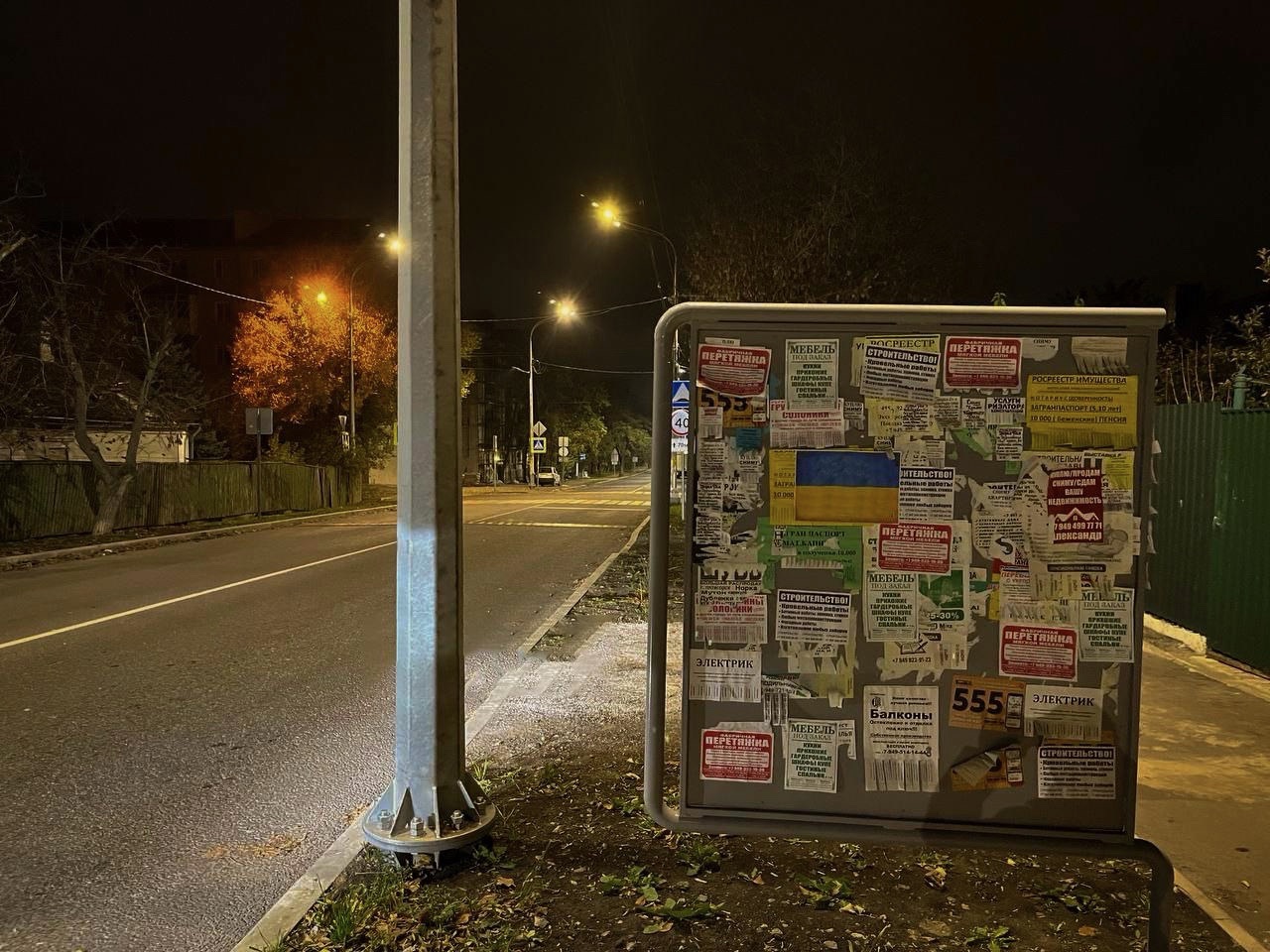
A lone Ukrainian flag stands out on a noticeboard in Mariupol. Photo: Copyright Petro Andriushchenko.

Economic control cements dependence. Russia has imposed forced rubleization, compelled below-market conversion of residents’ Ukrainian hryvnia into rubles, and replaced Ukrainian banks with sanctioned Russian state lenders and the Mir payment system, binding civilians to the occupier’s financial infrastructure. Across the occupied territories, economic struggle defines daily life. Employment is often illusory, monopolized by collaborators and sustained by Russian subsidies. The sister regions patronage scheme, launched in 2022, remains the official framework for reconstruction. Under this scheme, each occupied Ukrainian oblast, city, or district was paired with a specific Russian federal region (oblast, krai, or republic) that acts as its “patron,” making each region a stakeholder in the crimes of occupation but also serving as a loyalty market: Russian regions signal devotion to the Kremlin while capturing captive markets with inferior goods and services. Across 2023–2024, the Kremlin continued to replace local elites with parachuted Russian technocrats.2

Surveillance underpins the occupation’s control architecture. Almost all internet traffic is now channeled through FSB-monitored nodes integrated with Russia’s System for Operative Investigative Activities (SORM), enabling real-time monitoring of calls, messages, and metadata. Mandatory biometric SIM registration has almost ended any possibility of anonymity. On September 1, 2025, the Kremlin introduced the Max super-app across the occupied territories, fusing banking, messaging, and public services into a single monitored ecosystem that automatically syncs with SORM servers. This fusion of digital surveillance and physical coercion leaves residents permanently exposed to observation, data harvesting, and blackmail. Control of information underpins the parallel campaign to reshape identity, just as in Russia, albeit in even more repressive circumstances.

Propaganda and social pressure sustain an architecture of obedience. Under the supervision of Alexei Gromov, first deputy head of the presidential administration, occupation authorities manage a dense propaganda ecosystem: Specialist satellites broadcast localized Russian programming, while thousands of Telegram channels recast colonization as “reunification” and depict Ukraine as a failed state. Children are treated as ideological couriers within their own homes. By mid-2025, more than 5,500 Ukrainian children had been enrolled in the Young Army Cadets National Movement (Yunarmiya), where they were trained in basic weapons handling and taught to venerate Russian military power. Parallel initiatives, including Movement of the First, Warrior, Putin’s Team, and even a revived All-Union Leninist Communist Youth League (Komsomol) in Mariupol, together form a mutually-reinforcing ecosystem of militarized socialization. Parents who refuse to send their children face accusations of neglect or even risk losing custody. The forced recruitment and ideological conditioning of children under occupation constitute a clear violation of international humanitarian law and the Convention on the Rights of the Child.

The occupied territories serve as a testing ground for Russia’s governance and control mechanisms—either by intensifying practices already present within Russia (such as in education) or by piloting new forms of regulation before applying them domestically (for instance, in the information and communications sphere). Yet the situation in the occupied territories cannot be reduced to simply a harsher iteration of Russian authoritarianism. The methods employed differ not only in degree but often also in nature, reflecting the fundamental fact that these are Ukrainian lands inhabited overwhelmingly by Ukrainians. Consequently, the ideological and administrative controls imposed are reinforced by a deliberate project of demographic engineering designed to transform the population and erase Ukrainian identity.

Millions of Ukrainians have fled the territories since 2014, and especially since 2022. To replace them, Moscow accelerates settler programs that import Russian families, echoing Soviet-era policies toward the Baltic States, where as many as half a million locals were deported and then replaced with ethnic Russian settlers. The occupation authorities also recruit Central Asian workers, not as settlers but as instruments of normalization. Their recruitment exemplifies the regime’s calculated cynicism: Migrants serve as visible pioneers to signal safety and opportunity, legitimizing colonization through the illusion of voluntary relocation. It also works to further displace local Ukrainians through property seizures and economic marginalization. In cities such as Mariupol, reconstruction enforces segregation between residents and Russian newcomers, even as basic infrastructure collapses and many districts receive water only once every three days. “Show projects” fail to address structural decay, fueling quiet discontent that sometimes breaks the surface in small protests, quickly suppressed.

Remote Visualization

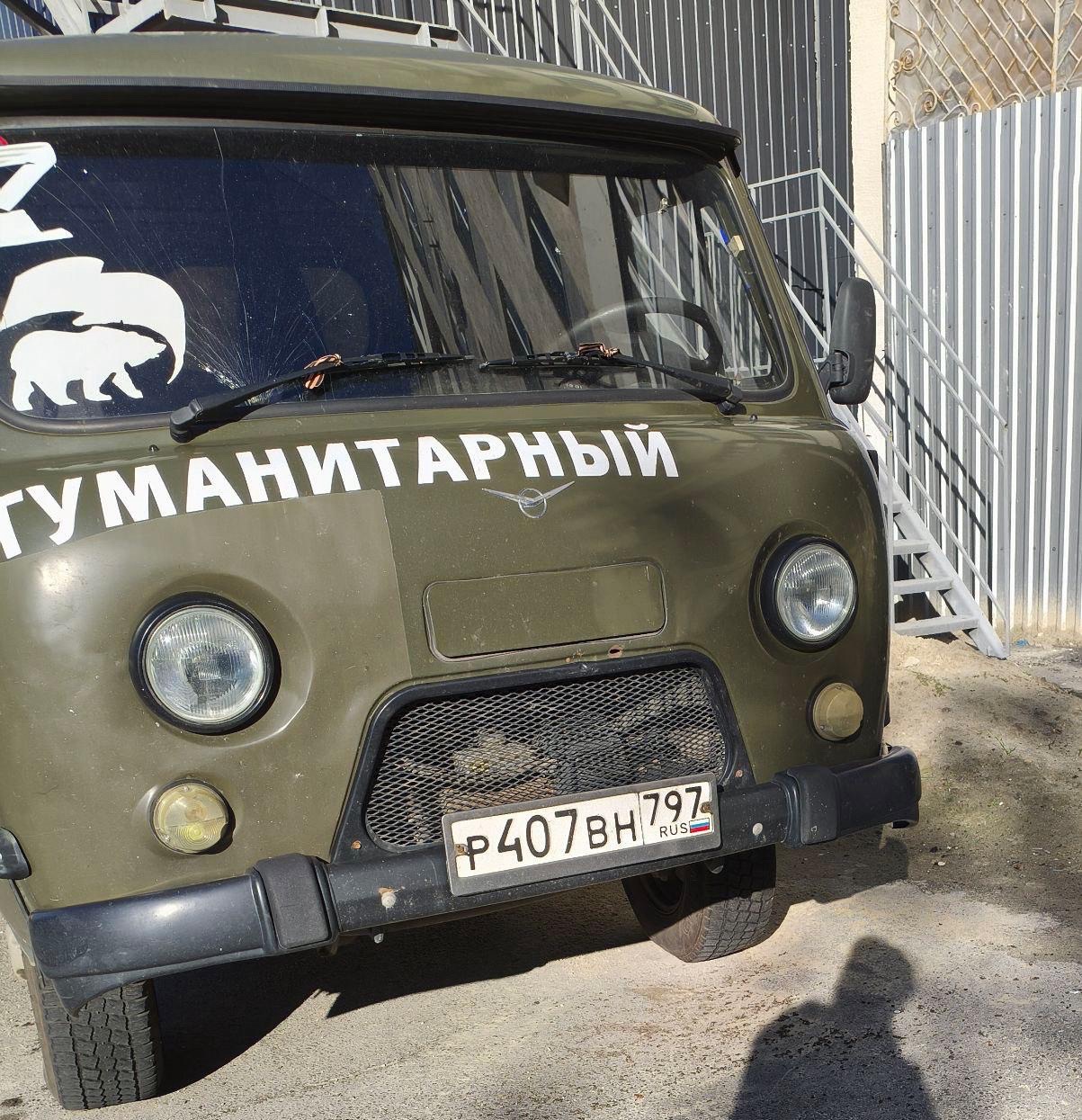
A “humanitarian vehicle” delivers aid in occupied Donetsk region. The car sports “United Russia” and “Z” stickers, as well as two St George Ribbons tied to the windshield wipers, examples of Russia’s continued efforts to merge their illegal occupation of Ukraine with the myths of World War II—what Russia calls the “Great Patriotic War.” Photo: Copyright Petro Andriushchenko.

Repression has grown in parallel. According to the Office of the UN High Commissioner for Human Rights (OHCHR), between February 2022 and August 2025, Russian authorities detained at least 15,250 civilians. The OHCHR has documented 161 official detention facilities across occupied Ukraine and Russia, plus 42 unofficial sites, often disused garages and basements. Those charged with terrorism or treason often did little more than watch Ukrainian media, repost content, or, at most, spray graffiti, yet sentences range from 10 to 30 years. Expectant mothers have been forced to give birth in black sites and children beaten to death for alleged leadership of resistance networks. This machinery of fear is supplemented by psychiatric internments, forced conscription, and disappearances. Journalists who try to investigate what is happening suffer similar fates: Viktoriia Roshchyna’s mutilated body was returned a year after her disappearance and twenty-six Ukrainian journalists remain in Russian captivity. The international community’s muted reaction has been interpreted by Moscow as permission to escalate.
 

From Symbolism to Sabotage: Landscapes of Resistance

In this paper, “resistance” refers to those loyal to the Ukrainian state who aid its authorities or armed forces in opposing and weakening the occupier’s control. Its core goals remain unchanged since 2022: preserving national identity, sustaining belief in liberation, maintaining morale, countering propaganda, and enabling Ukrainian military operations. Using the classic matrix (private/public, violent/nonviolent) today’s resistance can still be grouped, however imperfectly, into four overlapping categories. Each operates along a further axis of active or passive engagement. The challenge for Ukraine is not only to preserve resistance but to keep it active, which requires coordination beyond clandestine networks, reinforced politically through public appeals and militarily through recognition, intelligence use, and operational integration.

Remote Visualization

These categories are not rigid. Individuals may move between them or perform one role while enabling another. The vast majority of strategically significant resistance is now private and violent, the collection and transmission of human intelligence (HUMINT) that directly informs precision strikes, sabotage operations, and logistical disruption. Women continue to play an outsize and underappreciated role, because the conditions of occupation make them less visible and more mobile, but also because many occupy essential civilian-facing professions that grant them access to restricted spaces and information.

Intensified repression, pervasive surveillance, and systematic Russification have forced tactical innovation and a shift toward invisibility. Methods that began evolving in 2022–2023 have become essential survival adaptations by 2025. Nonviolent acts persist but are now largely private: preserving the Ukrainian language at home, accessing online education, or small symbolic acts. VPNs, though often disrupted, still allow limited access to Ukrainian information space. Residents, however, must remain constantly cautious, particularly in areas leading to the front line, where checkpoints and random searches bring the most intrusive scrutiny. Those who wish to leave the occupied territories face numerous barriers, including the high cost of travel, restrictions on men of military age, and the absence of valid documents required to exit Russia or enter Ukraine or the European Union. These restrictions, combined with pervasive surveillance and checkpoints, effectively trap large segments of the population, turning movement itself into a tool of control.

Remote Visualization

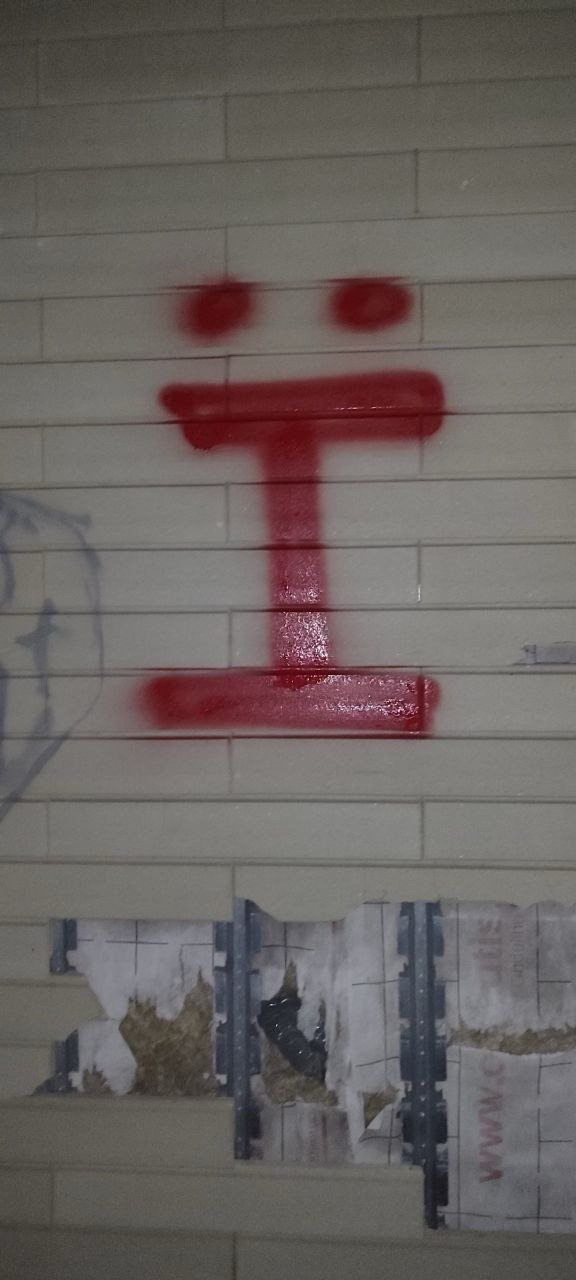
A Ukrainian Ї (pronounced “yi”) spray-painted in Mariupol. The letter, which does not exist in the Russian Cyrillic alphabet, has become a symbol of the resistance. Photo: Copyright Petro Andriushchenko.

Under total surveillance, sustained public activism is no longer viable: Visibility runs a terrible risk of exposure. Even peaceful acts can invite violent reprisals, as both intelligence work and symbolic defiance trigger repression. Expanding CCTV networks, biometric SIM checks, and the Max super-app have erased the limited safety margins that existed in 2022. Where public expression of resistance survives, as in the example above, it takes the form of graffiti and other affirmations of identity during national holidays or anniversaries, and is often connected to Ukrainian recruitment efforts for violent resistance.

The distinction between violent and nonviolent resistance has largely collapsed.

The distinction between violent and non-violent resistance has largely collapsed. As the founder of the Mariupol Resistance noted in an interview with the author: “The very term ‘nonviolent’ is manipulative. In war, everything leads to violence one way or another.”3 Under total surveillance, even peaceful acts carry violent consequences: Intelligence collection leads to strikes, and symbolic defiance triggers repression. Resistance should therefore be seen not as a binary of method, but as a continuum of risk and consequence. As resistance figure Artem Kariakin warned in 2024, poorly conceived nonviolent acts risk becoming a “conveyor belt” to the FSB as they lead to exposure and, in turn, capture and interrogation, for little gain.

To provide a snapshot of violent resistance, findings from ongoing analysis of public incident reporting (between December 2024 and October 2025) of violent resistance acts in the occupied territories are provided below. It shows a clear dominance of low-signature, disruptive operations, primarily vehicle arsons, sabotage of transport infrastructure, and targeted strikes on logistics.

Remote Visualization

The data indicates certain patterns. The south—particularly Kherson, Zaporizhzhia, and Mariupol—remains the main hub of sabotage, with precision attacks targeting supply chains, including ammunition convoys and rail-relay disruptions along Kakhovka and Tokmak routes. Melitopol continues to see vehicle arsons and assassinations of collaborators. Inside Russia, strikes on logistics and infrastructure nodes signal a shift from defensive resistance to cross-border disruption. Activity in Donbas and Crimea persists but is often carried out by Ukrainian armed forces working with coordinates and human intelligence provided from inside the occupied territories.

Remote Visualization

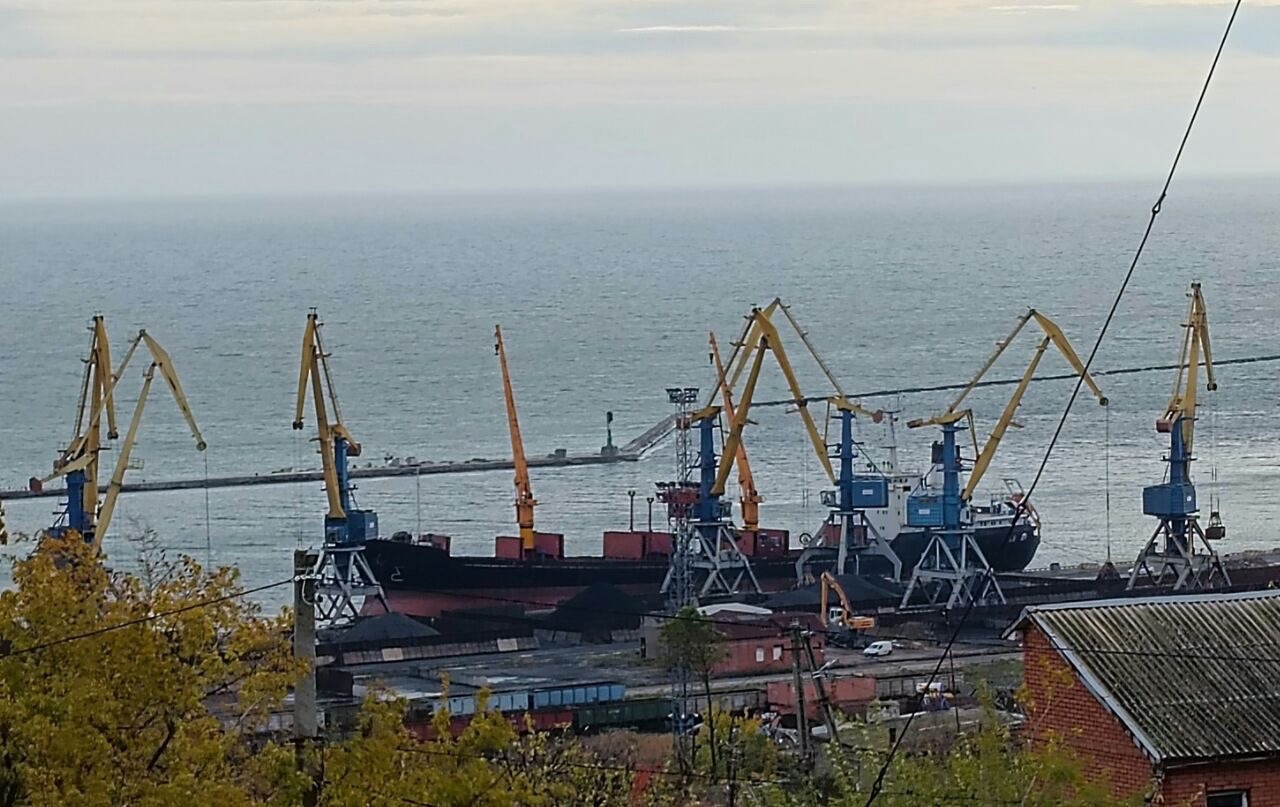
Mariupol port under occupation is pictured above. Agents track incoming and outgoing cargo. Russia sometimes sends expropriated grain and coal from here to countries in Africa, Asia, and the Middle East. Photo: Copyright Petro Andriushchenko.

According to estimates from those surveyed for this report, only about 20 percent of resistance acts become public; most remain covert for security reasons.

According to estimates from those surveyed for this report, only about 20 percent of resistance acts become public; most remain covert for security reasons. Public exposure can raise morale but also risks compromising networks, so protecting agents—who are irreplaceable—takes priority. Medium-range strikes guided by local operatives have greater tactical impact than headline-grabbing deep strikes, shaping front-line dynamics in areas such as Pokrovsk. Direct incursions by Special Operations Forces (SOF) or other agencies are rare; most effects derive from civilians transmitting verified intelligence. Resistance and the armed forces now function as a continuum, exemplified by figures such as Artem Timofeev, a Donetsk native who obtained a Russian passport to move freely and coordinate logistics for Operation Spider’s Web before disappearing. Effectiveness is measured less by visibility than by results: disrupted supply chains, delayed offensives, and resilient human networks ready for reactivation after de-occupation.
 

Structural Challenges in Resistance Networks

Ukraine’s resistance ecosystem faces three enduring structural constraints: (1) outdated command models unsuited to total surveillance, (2) uneven integration of technology and tradecraft, and (3) a persistent civil-military divide. Each directly affects agent safety, intelligence quality, and long-term resilience.

Rukh Oporu, the government-linked framework for organized resistance, simultaneously illustrates both problems and solutions. Subordinated to SOF, centrally it has faced challenges in systematizing modernized training, communications, and clandestine standards. Military hierarchies can be difficult to adapt to occupied conditions. Under continuous surveillance and social proximity, “stay-behind” doctrines with fixed cells and pre-positioned caches become liabilities. Many groups within Rukh Oporu adapted early and effectively, relying on trust and initiative as well as ad-hoc cooperation with agencies including the Security Service of Ukraine (SBU) and the Main Directorate of Intelligence, as well as independent networks on the ground.

Remote Visualization

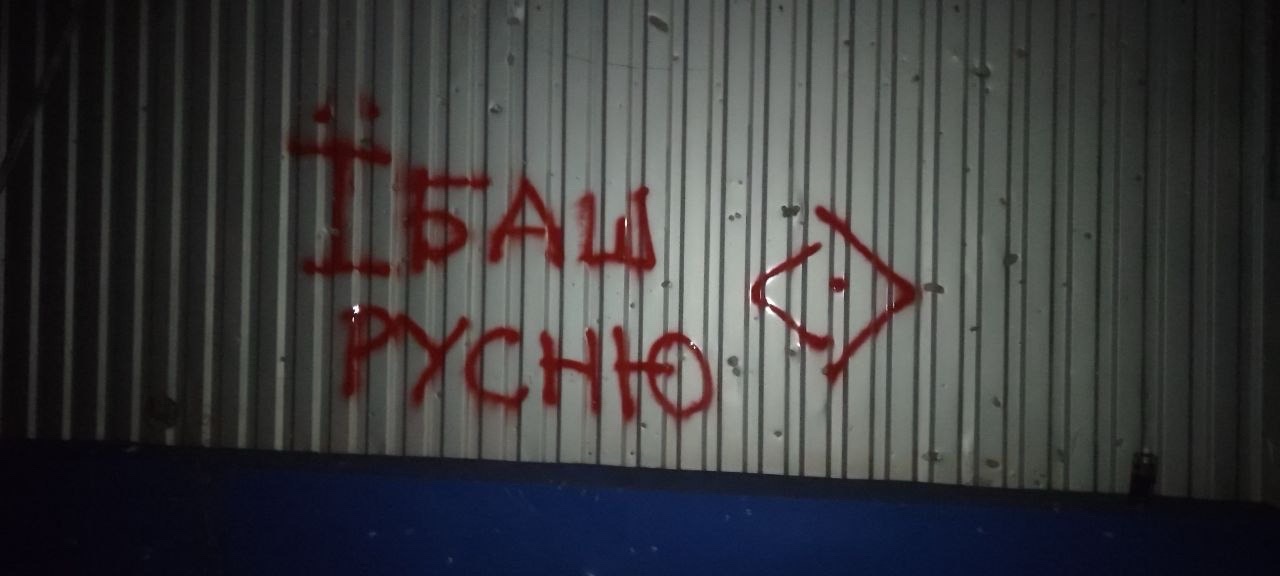
Anti-Russian Graffiti in Mariupol with the Rukh Oporu symbol (right). Photo: Copyright Petro Andriushchenko. 

Another persistent challenge lies in the conceptual frameworks used by Western partners to advise or support Ukrainian resistance. Much of their institutional experience is rooted in Middle Eastern and counterinsurgency contexts, environments where physical access to agents and communities was comparatively open. Such assumptions translate poorly to Ukraine, where total surveillance, filtration, and social proximity make clandestine engagement far more restrictive. The result is an overemphasis on visibility, programming, and technology-driven solutions that often ignore the constraints of occupied life. Ukrainians themselves often find it difficult to challenge these Western-imported approaches, reluctant to bite the hand that feeds them even when such tactics are clearly unsuited to their operational reality.

Technological misalignment has the potential to compound any fragility. Across the occupied territories, interactive reporting tools, unvetted chat formats, and apps retaining metadata have exposed users to detection. Preventing such failures requires audits rooted in context, not just code, to understand how civilians live and communicate under occupation and how they can do so as safely as possible. This, in turn, highlights the central truth: Resilience depends on civilian-led, trust-based systems that draw strength from local knowledge, dialectal fluency, discreet logistics, psychosocial support, and community legitimacy. Under total occupation, survival relies less on command than on networks people trust to protect them.

Resilience depends on civilian-led, trust-based systems that draw strength from local knowledge, dialectal fluency, discreet logistics, psychosocial support, and community legitimacy.

The civil–military divide adds another layer of friction. Civilian networks prioritize survival, community protection, and discreet intelligence collection; military information operations emphasize reach, tempo, and psychological effect. When poorly aligned, these tempos collide—what boosts morale externally can expose agents locally. Institutionalized liaison mechanisms are needed to incorporate local insight into information operations planning while maintaining ethical and operational separation between public messaging and clandestine HUMINT.

In the most impactful parts of the resistance movement, these pressures have long since driven an organic transition from the classical cell model to the puzzle system, in which agents operate independently, coordinators relay narrowly defined tasks from analysts based in free Ukraine, and analysts synthesize the inputs. Compartmentation ensures that the loss of one node does not endanger the others. Coordinators interviewed for this and other papers argue that horizontal, trust-based management—combining agent initiative with coordinator autonomy—produces far greater resilience than rigid hierarchies.
 

Effective Adaptation in Resistance Networks

An effective resistance structure under occupation thus combines three interlocking levels:

  • leadership (based in free Ukraine) providing strategic oversight, analysis, open-source intelligence (OSINT) integration, and communication. Analysts verify data and attribution, OSINT specialists supply territorial- and personal-data context, communicators convert verified outcomes into morale-sustaining narratives without compromising tradecraft.
  • coordinators (three to five per administrative district of roughly 700,000 people) as the operational core, recruited locally wherever possible to reduce exposure. Non-locals should complete immersion training in geography, networks, and dialects. Training blends recruitment, logistics, and cybersecurity with a focus on autonomy and compartmentation.
  • agents, ideally recruited after occupation begins, driven by ideological motivation rather than material reward. Prewar civic networks provide recruitment pools. Psychological screening and aftercare are essential: People under 27 and over 50 take greater risks, while those aged 27–45 often function best as information conduits.

Operational safeguards reinforce this design. Orders should be brief, compartmented, and validated through a two-coordinator rule for high-risk intelligence. Caches remain vital but must be contactless and dispersed, containing clean devices, power supplies, observation tools, and multicurrency reserves. Because online access is monitored, physical field manuals disguised as ordinary books should outline cybersecurity, filtration behavior, and emergency tradecraft. Coordinators mentor agents through these stages according to risk level.

Effectiveness cannot be judged by incident counts or participant numbers alone. Stronger indicators include verified case studies, evidence of resistance contributions to confirmed Ukrainian strikes, and correlations between HUMINT inputs and precision targeting. Qualitative metrics—endurance of networks under repression or intelligence reliability—often reveal more than quantitative tallies. Centralizing data purely for measurement should be avoided: A single reporting hub is more dangerous than incomplete data.

Remote Visualization

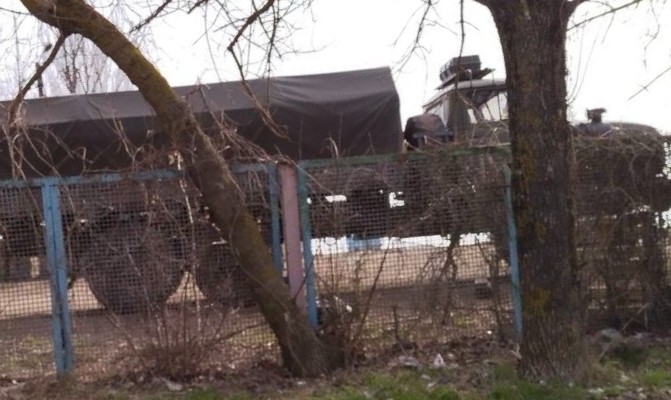
Russian equipment moves toward the front. This is the type of image sent as intelligence to Ukrainian armed forces. Photo: Copyright Petro Andriushchenko.

The goal is not tighter command but professionalized civilianization, embedding psychologists, legal advisers, communicators, and logisticians within decentralized frameworks that exist to support the resistance from free Ukraine. This approach improves tradecraft, ensures ethical compliance, and mitigates trauma without reinstating rigid hierarchies. Ukraine’s resistance has largely evolved from command-driven cells to trust-based, decentralized networks designed for survival under total occupation. The next step is structural refinement: Align technology with tradecraft, close civil-military gaps through institutional liaison, and invest in the human and technical capacities that allow networks to endure even when cut off from territory.
 

Trust, Technology, and Human Intelligence

Under occupation, trust sustains every functioning intelligence network and defines the moral contract that underpins HUMINT. Each act of reporting carries mortal risk; preserving these flows is therefore both a technical and ethical responsibility.

Digital tools remain indispensable but dangerous. Methods such as unsaved drafts, encrypted temporary storage, timed deletions, and air-gapped devices reduce risk, yet are realistically used only by the most engaged resistance members. Wherever possible, resistance members try to use analogue forms or borrow from the analogue age (e.g. using Aesopian or locally coded language only understandable to people from their friendship group or particular demographic and locality). Nevertheless, sending coordinates requires digital access. With WhatsApp and Signal either blocked or perceived by occupying authorities as grounds for suspicion, most communication still relies on secret Telegram chats—fragile but accessible to civilians. Chatbots and automated reporting systems vary dramatically in safety: One-way encrypted “dead drops” with no metadata retention are notably safer (or at least less unsafe) than interactive tools that allow multiple uploads, issue notifications, or retain identifiers, which Russian surveillance systems can easily trace. Intelligence collection cannot be safely crowdsourced under total surveillance. Ukraine has a duty to its citizens in the occupied territories under international law that it should not outsource to unregulated commercially built or volunteer systems.

Remote Visualization

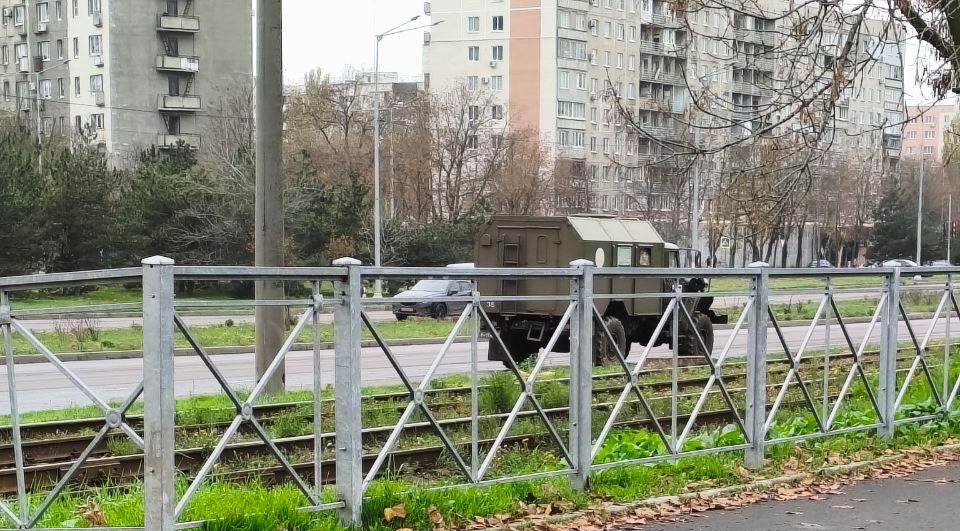
Russian military equipment drives along the main highway in Mariupol. Photo: Copyright Petro Andriushchenko.

Under conditions of pervasive propaganda and coercive control, credibility becomes a form of strategic currency.

Trust must rest on both protection and credibility. Inaccurate or performative social media content, including exaggerated sabotage claims, fictitious partisan groups, and staged “operations,” undermines genuine networks by eroding public confidence. Under conditions of pervasive propaganda and coercive control, credibility becomes a form of strategic currency: It determines whether occupied populations regard Ukraine and its partners as reliable sources of information. Sustained trust therefore depends on consistent protection of participants and the dissemination of verifiable, useful information. Credibility, once established, functions not as sentiment but as infrastructure to enable continued cooperation and preserving belief in Ukrainian legitimacy—a prerequisite for eventual reintegration.
 

Legitimacy, Continuity, and Endurance with Integrity

In modern history, wherever territories under total occupation have regained sovereignty, three forces recur: legitimacy, continuity, and endurance. The Baltic States, Western Europe under Nazi rule, and postwar East Germany all show that sovereignty can outlast the destruction of state institutions when people act as though its return is inevitable. Occupied Western Europe during World War II is especially instructive. Despite surveillance, propaganda, and repression, societies maintained governments-in-exile, underground networks, and a separate sense of moral cohesion that denied the occupier the ability to normalize its rule. Civilian intelligence, clandestine presses, and symbolic loyalty preserved a shared reality the occupiers could not erase.

Liberation came through force of arms, but with the support of the reactivation of that legitimacy which had survived underground. Russia’s current attempt to impose its own symbols, laws, and language over Ukraine aims precisely to sever that continuity. The task of resistance, therefore, is not merely to disrupt or destroy, but to preserve and to maintain the informational, moral, and psychological coherence of Ukrainian sovereignty under the hardest conditions for when the change in circumstances may come. That day feels far away right now but history, even recent history, shows that apparent stability can collapse overnight. So-called frozen conflicts can unfreeze dramatically, as in Nagorno-Karabakh. The lesson for Ukraine is one of endurance with integrity: Occupation must never be allowed to normalize, and sovereignty must remain a living relationship—sustained through trust, memory, and networks that bind civilians and the state even in the absence of territory.

Recommendations for Western Partners

Under total occupation, the purpose of resistance is practical: to help people survive, to supply reliable human intelligence, and to keep alive the belief in eventual reunification. Its strength lies less in visible acts than in trust, local knowledge, and continuity. In environments built on fear and surveillance, everyday cooperation, the safe transfer of information, medicine, or funds, achieves more than dramatic operations will.

  1. Maintain these networks with both material and moral support. Secure communication tools, discreet logistics, psychosocial care, and training that emphasizes trust, verification, and local understanding are required. Such systems are hard to sustain, and Ukrainian exhaustion under constant attack makes external backing critical. Western partners can help by focusing on protection rather than publicity, strengthening secure channels, funding professional coordination, and supporting the civilians who keep these networks alive. Credibility and endurance, not visibility, are the real measures of success. Resistance depends on steady international partnership (from European states and Western publics).
  2. Reassert moral clarity and visibility. Frame Russia’s occupation as illegal, brutal, and temporary. Western governments should treat advocacy for detainees and deported children as a diplomatic priority, not a humanitarian sideline. Every negotiation must restate that forced detention, indoctrination, and assimilation are crimes against humanity, and no political settlement can legitimize them. Support organizations such as Save Ukraine, ZMINA, Justice Initiative Fund, Ukrainian Legal Advocacy Foundation, Centre for Civil Liberties, and others that document abductions and track perpetrators.
  3. Protect and reconnect occupied populations. Isolation sustains occupation; connection undermines it. Establish secure, one-way lifelines that give residents access to education, culture, and truthful information without exposing them to risk. Expand remote Ukrainian-language schooling, and simplify entry requirements (e.g., the need for parents’ signature on documents) for teenagers from occupied regions. Create dedicated visa, scholarship, and reception programs that recognize these citizens as Ukrainians under temporary occupation.
  4. Support secure and decentralized resistance. Underground networks remain vital to delaying Russian consolidation. Western assistance should fund secure communications, discreet logistics, and tradecraft training (for those in free Ukraine) rather than publicity-driven programs. Prioritize psychological support and extraction options for exposed agents, drawing on lessons from groups such as Helping to Leave. Oversight must emphasize safety, accountability, and adaptability over centralization.
  5. Build trust through credible information. Trust is strategic infrastructure. Counter disinformation by delivering verified, useful content—evacuation guidance, administrative updates, and safety alerts—through secure channels. Ukraine and its partners should develop automated but human-supervised systems for distributing practical information, avoiding exaggerated claims or patriotic slogans that erode credibility.
  6. Enforce accountability and transparency. Justice underpins legitimacy. Protect coerced civilians but sanction active collaborators and enforcers of repression through coordinated travel bans, asset freezes, and intelligence sharing. Support Ukraine’s legal institutions and the OSINT community to improve attribution and deterrence, while ensuring zero tolerance for any illegitimate business dealings between free and occupied Ukraine. For example, investigative journalists at Bihus and other Ukrainian outlets have raised serious allegations in relation to Danylo Hetmantsev, a Rada deputy and chairman of the Rada’s Finance, Tax and Customs Policy Committee, and what is allegedly his family’s business in occupied Crimea. In another example, on February 11, 2025, the National Police and the Security Service of Ukraine confirmed a former people’s deputy and his two sons were conducting business in occupied Luhansk region. Epitsenr K (a major Ukrainian retailer) is widely alleged to have maintained connections to its outlets in occupied Donbas and Crimea.
  7. Localize storytelling, internationalize awareness. Because residents cannot safely speak for themselves, fund translation, documentation, and archiving initiatives to record life under occupation. Support Ukrainian local journalists in evacuation to preserve factual, anonymized testimony that sustains awareness without sensationalism. Zmina’s “Letters to Occupation” provide just one such example.
  8. Anchor assistance in lived realities. Ground aid in the real conditions of occupation (e.g., surveillance, disappearances, and rationing), not imported models. Prioritize micro-scale financial and psychosocial support, sometimes delivered via crypto or trusted intermediaries. Tailor approaches to Ukraine’s context: Lessons from Soviet-era occupations are more relevant than those from Western invasions of Afghanistan or Iraq.
  9. Refuse normalization and prepare for endurance. Russia normalizes control through isolation and impunity; resistance endures through connection and trust. Western partners should institutionalize support by creating a standing civil-military mechanism (within the Security Assistance Group-Ukraine or elsewhere in NATO) to modernize resistance frameworks, drawing on Ukraine’s experience to strengthen civilian resilience against coercive occupation.

Conclusion

Despite the occupier’s efforts to extinguish identity, agency, and connection, Ukrainians continue to resist in ways that prioritize survival over spectacle. Much of this work remains unseen, but its strategic impact is felt in the quiet disruption of logistics, the preservation of dignity, and the maintenance of some form of separate moral and informational world. What matters now is ensuring these networks can endure - protected, resourced, and trusted—so they are not eroded by exhaustion or exposed by unrealistic expectations. With steady, credible support that reflects the lived realities of occupied life, these networks can persevere quietly and be ready for reactivation when conditions shift. In this way, Ukraine’s sovereignty is not rebuilt from absence but sustained in continuity, waiting to be restored openly when the moment comes, however far away that day may seem. History is full of unexpected surprises.

Please consult the PDF for references.

Jade McGlynn is a senior associate (non-resident) in the Europe, Russia, and Eurasia Program at the Center for Strategic and International Studies (CSIS) in Washington, D.C.

This report is made possible by a grant from Carnegie Corporation of New York.

Image
Jade McGlynn
Senior Associate (Non-resident), Europe, Russia, and Eurasia Program